Research Impact: MOVE Program

Multidisciplinary Oncology Vitality and Exercise (MOVE) Program
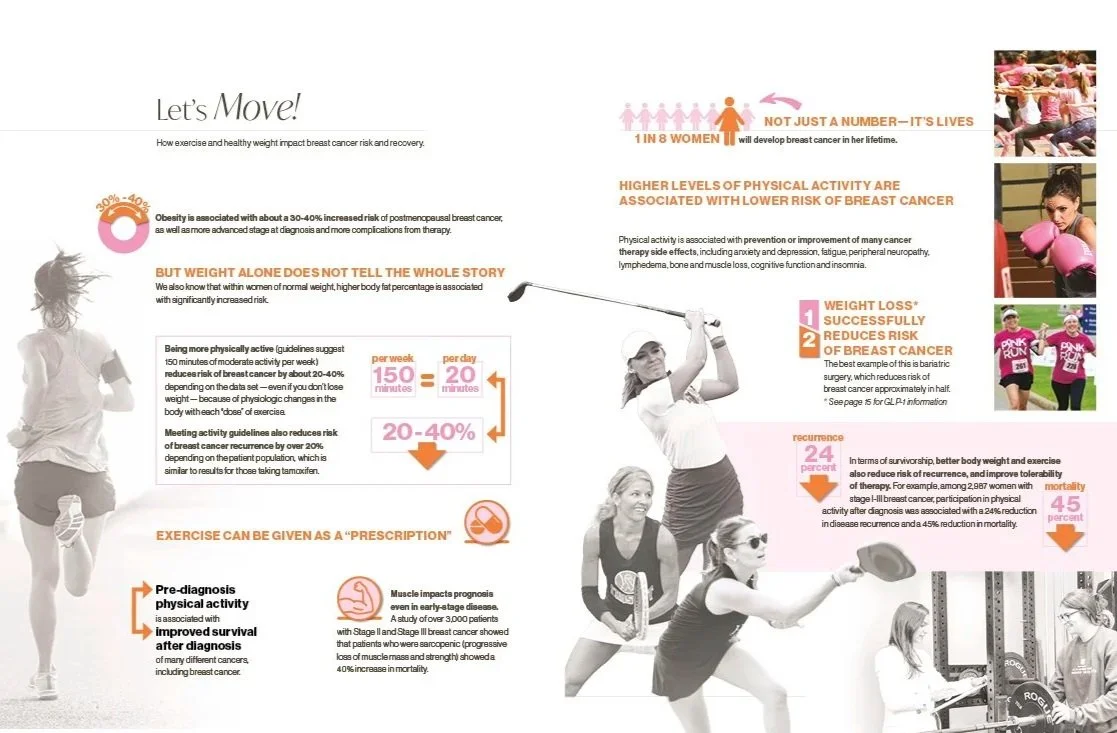
Researchers are studying the role of exercise in preventing breast cancer. Research has shown that movement and exercise are associated with reduced risk of breast cancer.* However, to date, the mechanism behind this association is unclear.
Tarah Ballinger, MD, is leading a study in breast cancer prevention. Women at high risk for breast cancer are participating in a six-month exercise intervention. In partnership with the Komen Normal Tissue Bank, housed at the Vera Bradley Foundation Center for Breast Cancer Research, participants are donating breast tissue before and after the exercise program. The goal is to use these samples to evaluate changes in the tissue microenvironment.
Movement and Breast Cancer
Challenge
Anti-estrogen medications the majority of survivors take to help reduce the risk of recurrence can cause long-term and short-term side effects, including bone loss and muscle weakness. While exercise has proven to be beneficial for women with early-stage breast cancer, its potential benefit for women living with metastatic breast cancer (MBC) hadn’t been studied.
Discovery
Looking for ways to help breast cancer patients and survivors thrive is a primary research focus for TARAH J. BALLINGER, MD. Her team is currently exploring how muscular health can be improved in breast cancer survivors who are on an anti-estrogen therapy. Anti-estrogen medications cause bone breakdown, which seems to release chemicals that cause muscle dysfunction. In an attempt to counteract this, Dr. Ballinger is looking at the possibility of adding low intensity vibration to survivors’ exercise programs to preserve their bone and muscle health.
Another study involves delivering a 1:1 virtual exercise training program to women with MBC. The goal is to determine whether exercise can improve outcomes for these individuals, including cardiovascular fitness, physical functioning, quality of life, metabolism, and levels of circulating tumor cells. In addition to its primary research objective, the study also represents the need for survivorship research to include those with metastatic disease.